How to Read a Handmade Natural Soap Ingredient List with Confidence
Have you ever picked up a handmade soap, looked at the ingredient label, and thought:
"I have no idea what any of these names mean."
You're not alone.
Many people assume that a long or unfamiliar ingredient name automatically means it's artificial or harmful.
In reality, that's often not the case.
Learning how to read a handmade natural soap label can help you choose products with greater confidence and understand exactly what you're putting on your skin.
Why Do Handmade Soap Ingredients Look So Different?
Handmade soap makers often list ingredients using their INCI (International Nomenclature of Cosmetic Ingredients) names.
These standardized names are used around the world so ingredients can be identified consistently, regardless of language or country.
For example:
| Common Name | You May See on the Label |
|---|---|
| Olive Oil | Olea Europaea Fruit Oil |
| Coconut Oil | Cocos Nucifera Oil |
| Castor Oil | Ricinus Communis Seed Oil |
| Rice Bran Oil | Oryza Sativa Bran Oil |
While these names may seem intimidating, they simply refer to familiar plant-based ingredients.
The Main Ingredients You'll Usually Find
Most handmade natural soaps contain a small number of carefully selected ingredients.
Plant Oils
These form the foundation of the soap and contribute to cleansing, conditioning, and lather.
Examples include:
- Olive Oil
- Coconut Oil
- Castor Oil
- Rice Bran Oil
- Sunflower Oil
Water
Water helps bring the ingredients together during the soap-making process.
Sodium Hydroxide
This is one ingredient that often surprises people.
Although sodium hydroxide is essential during soap making, it reacts with the oils through a process called saponification.
When the soap is properly formulated and fully cured, the sodium hydroxide has been completely consumed during the soap-making process. A properly made bar of handmade soap contains no remaining lye, leaving behind only the finished soap and naturally formed glycerin.
Fun Fact: Sodium hydroxide is essential to make real soap, but it does not remain in a properly formulated and fully cured bar.
Botanical Ingredients
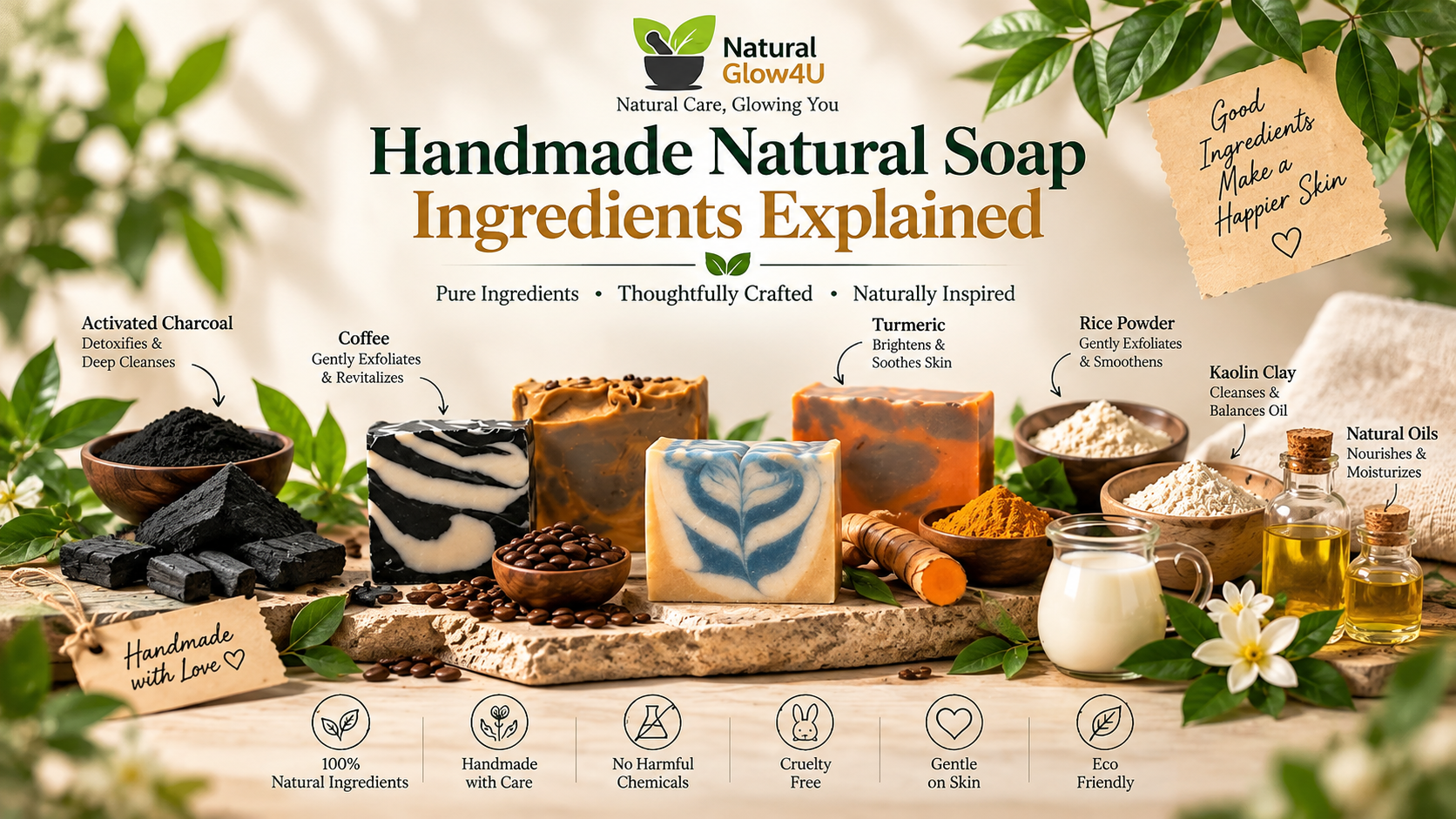
Handmade soaps may also include natural additions such as:
- Aloe Vera
- Neem
- Moringa
- Turmeric
- Activated Charcoal
- Oatmeal
- Botanical Powders
These ingredients are chosen to create unique soap varieties and enrich the overall skincare experience.
Essential Oils
Essential oils are commonly added to provide natural fragrance and enhance the sensory experience of using handmade soap.
How to Read an Ingredient List Like a Pro
Here are a few simple tips:
- ✔ Look for recognizable plant oils.
- ✔ Understand the purpose of each ingredient instead of judging it by its name.
- ✔ Don't assume that scientific names mean synthetic ingredients.
- ✔ Appreciate shorter, more transparent ingredient lists.
An ingredient list tells the story of how a soap was crafted—not just what it contains.
A Simple Example
Imagine you see this ingredient list:
- Olive Oil
- Coconut Oil
- Rice Bran Oil
- Castor Oil
- Aloe Vera
- Essential Oil
Rather than focusing on unfamiliar scientific names, think about what each ingredient contributes:
- Olive Oil helps condition the skin.
- Coconut Oil supports cleansing and creates a rich lather.
- Rice Bran Oil contributes to skin comfort.
- Castor Oil creates a creamy, stable foam.
- Aloe Vera adds a refreshing botanical touch.
- Essential Oils provide natural fragrance.
Understanding this makes choosing a handmade soap much less intimidating.
Final Thoughts
Reading a handmade natural soap ingredient list doesn't require a chemistry degree.
It simply takes a little curiosity.
Once you know what the ingredients represent, you'll begin to appreciate the care, craftsmanship, and thoughtful formulation behind every handcrafted bar.
At NaturalGlow4U, we believe transparency is part of great skincare. Because understanding your ingredients is the first step toward making confident choices for your skin.
Curious About the Ingredients in Your Everyday Skincare?
Explore more educational articles from NaturalGlow4U to learn about natural oils, botanicals, and traditional soap-making techniques.
Which ingredient have you always wondered about?
Leave a comment below, and we may feature it in our next ingredient guide.
💬 0 Comments
No comments yet. Be the first to share your thoughts! 🌿
Leave a Comment