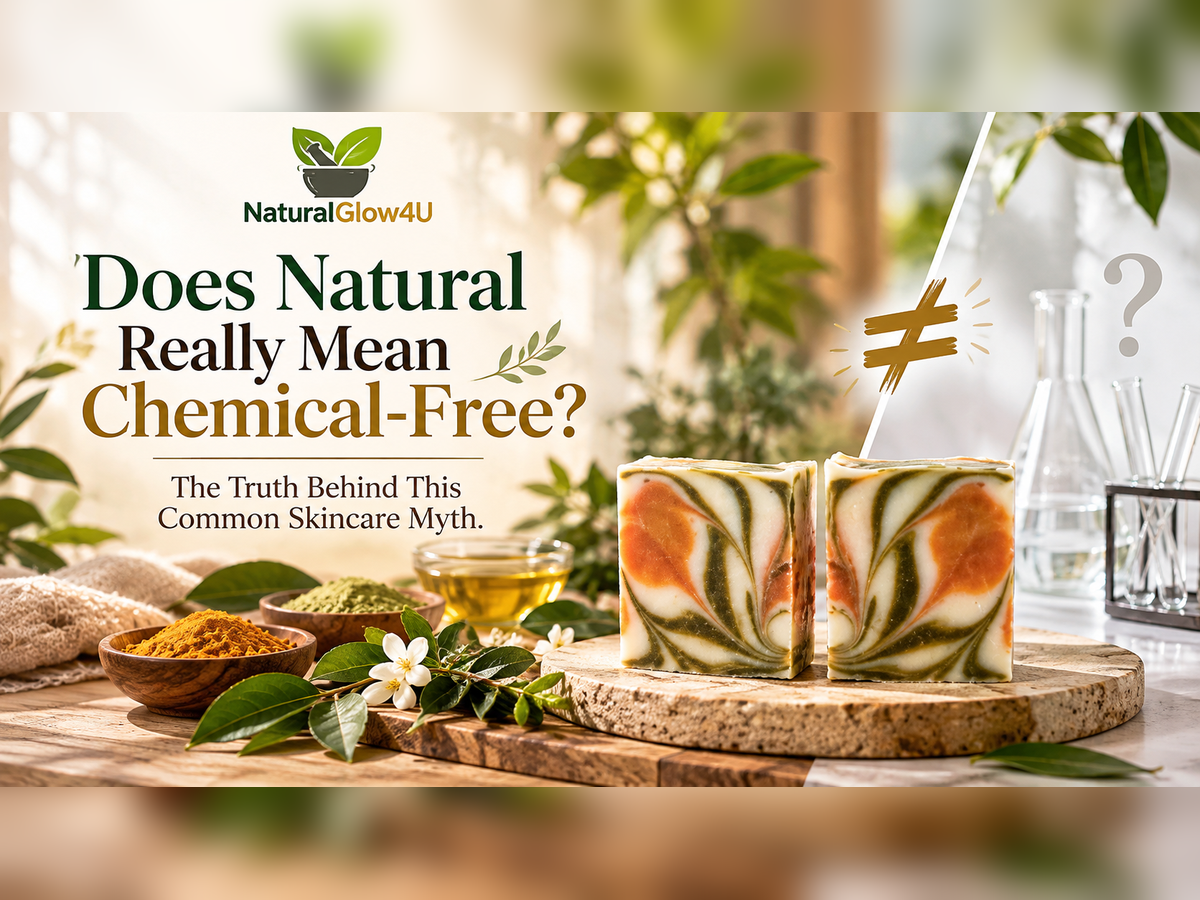
Does Natural Really Mean Chemical-Free? The Truth Behind This Common Skincare Myth
“Natural means chemical-free.”
It sounds reassuring. It appears on skincare labels, social media posts, and product descriptions everywhere.
But there's one problem:
Natural does not mean chemical-free.
And understanding why can help you become a much smarter skincare consumer.
Does “Natural” Really Mean Chemical-Free?
The short answer is no.
“Natural” generally describes where an ingredient comes from or how it is obtained. “Chemical-free,” however, is scientifically misleading because everything around us is made of chemicals.
Water is a chemical.
Aloe Vera contains many chemical compounds.
Olive oil is made up of chemical substances.
Even our skin and body are made of chemicals.
So when a skincare product says “100% chemical-free,” it's worth asking exactly what the brand means.
The presence of a chemical doesn't tell you whether something is good or bad. The specific substance, amount, formulation, and intended use matter much more.
Everything Is Made of Chemicals
The word chemical often sounds frightening because it's commonly associated with synthetic or harmful substances.
Scientifically, however, a chemical is simply a substance with a defined chemical composition.
For example:
| Ingredient | What It Is |
|---|---|
| Water | A chemical compound (H₂O) |
| Citric Acid | A naturally occurring organic acid |
| Glycerin | A compound commonly found in fats and oils |
| Sodium Chloride | Salt |
Some chemicals occur naturally.
Others are manufactured.
And some naturally occurring substances can still cause irritation or allergic reactions in certain people.
That's why “natural” and “safe” aren't interchangeable words.
So, Are Chemicals Bad for Your Skin?
Not necessarily.
A more useful way to evaluate a skincare ingredient is to ask:
- What is the ingredient?
- Why is it being used?
- How much is present?
- How is the finished product formulated?
- Is it appropriate for its intended use?
For example, an ingredient may be completely natural but still cause sensitivity for a particular person.
Likewise, a laboratory-made ingredient can have a well-established purpose and be suitable for use in a properly formulated cosmetic product.
The goal shouldn't be to fear every chemical.
The goal should be to understand ingredients rather than judge them simply by whether they sound natural or scientific.
What About Handmade Natural Soap?
This distinction becomes especially interesting with handmade soap.
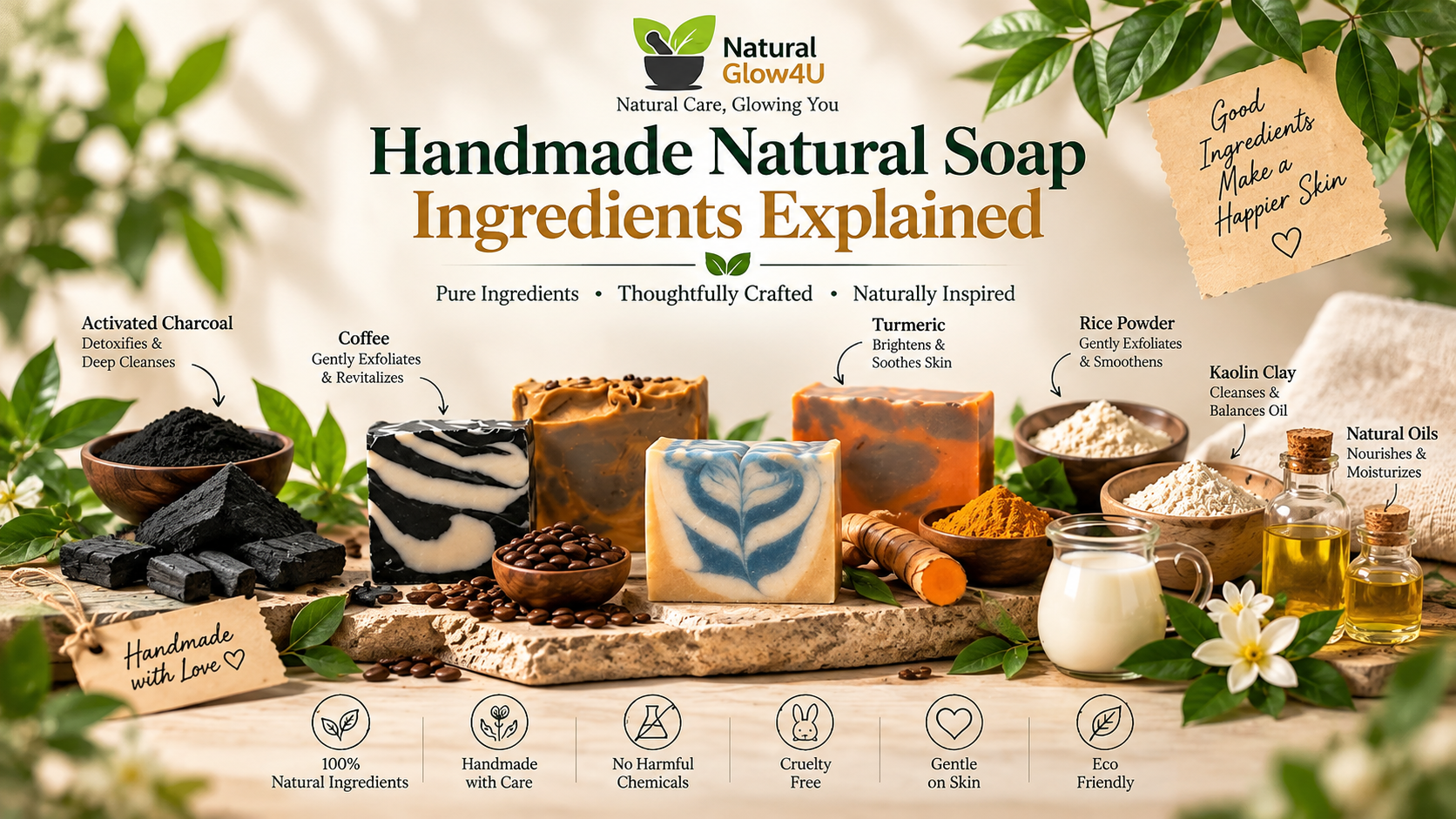
Handmade natural soap can contain beautiful botanical ingredients such as:
- Olive Oil
- Coconut Oil
- Aloe Vera
- Neem
- Moringa
- Turmeric
- Oatmeal
- Botanical Powders
But making real soap also involves a chemical reaction called saponification.
What Happens During Saponification?
Traditional soap making requires oils or fats and an alkali such as sodium hydroxide.
The sodium hydroxide reacts with the oils during saponification, transforming them into soap and naturally formed glycerin.
This is not something to hide from customers.
It's actually an important part of understanding how soap is made.
A properly formulated soap recipe is carefully calculated so the ingredients react appropriately, followed by adequate curing and quality checks.
So calling handmade soap “chemical-free” would not accurately describe the science behind it.
Calling it handmade, naturally inspired, thoughtfully formulated, or made with carefully selected botanical ingredients can be much more meaningful—provided those claims are truthful.
What Should You Look for Instead?
Rather than looking for the words “chemical-free,” look for transparency.
1. A Clear Ingredient List
A trustworthy brand should tell you what is in the product.
You shouldn't have to rely entirely on vague phrases such as “pure,” “clean,” or “toxin-free.”
2. Understand the Purpose of Ingredients
Instead of asking whether an ingredient sounds natural, ask what role it plays.
- Is it an oil?
- A botanical?
- A cleansing ingredient?
- A fragrance?
- A preservative?
- A colorant?
Understanding the purpose gives you much more useful information.
3. Look Beyond Marketing Language
Words like natural, clean, organic, chemical-free, and non-toxic can mean different things depending on the product and context.
Don't let one attractive phrase make the entire purchasing decision.
Look at the whole formulation and the credibility of the brand.
The NaturalGlow4U Approach
At NaturalGlow4U, we believe customers deserve to understand what they're buying.
That's why we prefer talking about thoughtfully selected natural ingredients, handmade craftsmanship, transparent formulation, and mindful skincare rather than creating fear around the word “chemical.”
Natural skincare doesn't need to be built on fear.
It can be built on knowledge, transparency, and thoughtful choices.
Final Thoughts
The idea that “natural always means chemical-free” sounds simple—but science tells us the story is more nuanced.
Natural ingredients are made of chemicals.
Synthetic ingredients aren't automatically harmful.
And “chemical-free” isn't a meaningful scientific standard for evaluating skincare.
The better question is:
What is in the product, why is it there, and has it been thoughtfully formulated for its intended use?
Once you start asking those questions, ingredient labels become less intimidating—and skincare choices become much more informed.
At NaturalGlow4U, we believe honest skincare education is more valuable than fear-based marketing.
Because when you understand your ingredients, you can choose your skincare with confidence.
Curious About What's Really Inside Your Skincare?
Explore more NaturalGlow4U educational articles to learn about natural oils, botanical ingredients, handmade soap-making, and how to read skincare labels with confidence.
What's one skincare ingredient you've always wondered about?
Leave a comment below. Your question might become the topic of our next ingredient guide. 🌿
💬 0 Comments
No comments yet. Be the first to share your thoughts! 🌿
Leave a Comment